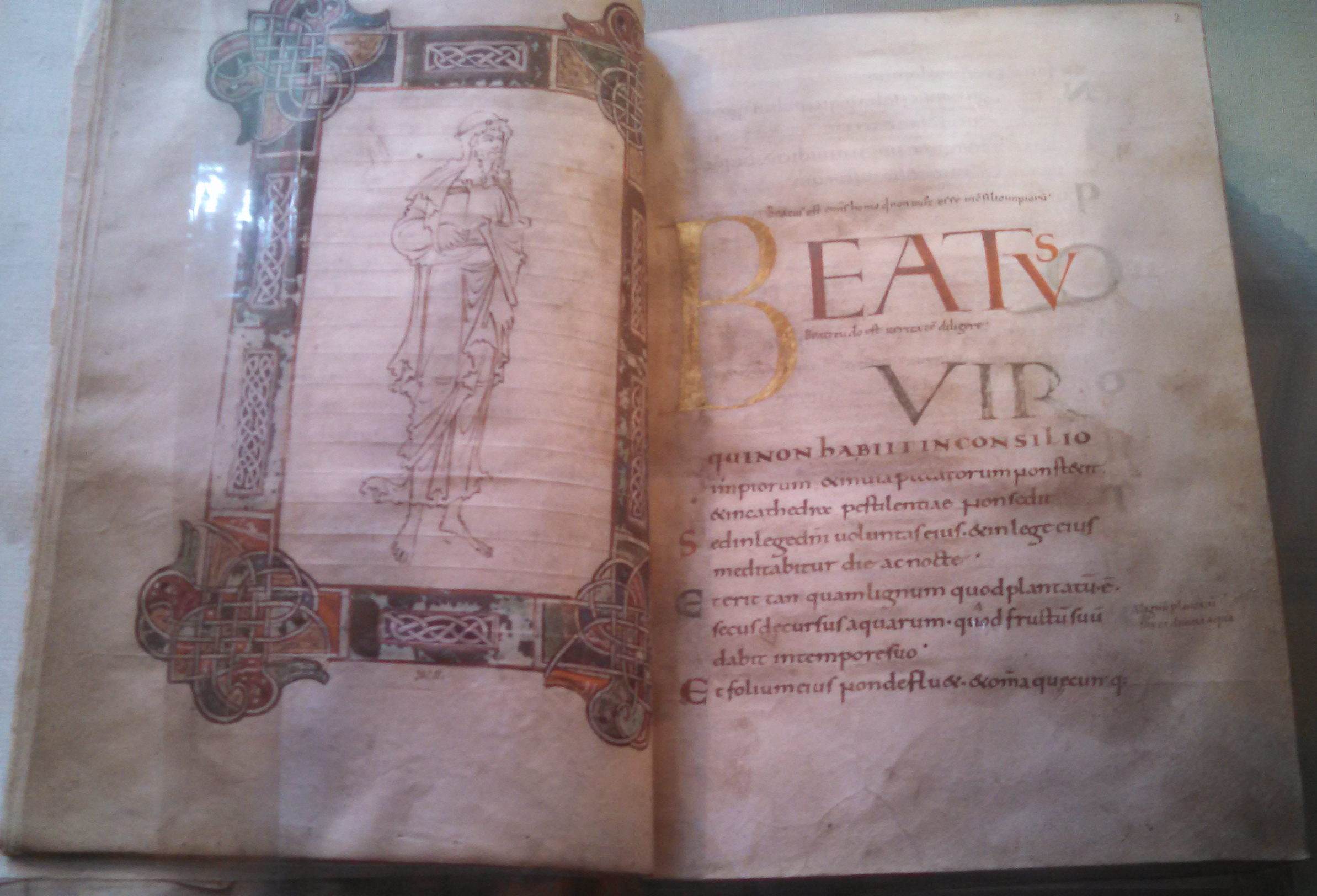

Psalm 2:1—”Why do the nations conspire, and the peoples plot in vain?” (NRSV).
The word translated “conspire” is elsewhere translated “so furiously rage together” (as one finds in Handel’s, Messiah, part 2, scene 6, for instance). These renderings, or variations thereof, are the two most common translations for the Hebrew רָגְשׁ֣וּ. Why is there a disparity in English translations? Clearly, conspire is not semantically related to rage. If anything, rage may motivate peoples to conspire against overlords or other people groups.
The reason for the English translation disparity is clear when one considers that the verb only occurs here in the Hebrew Bible. Fewer usages muddles a clear understanding of the contours of the verb’s semantic range. Though the Hebrew verb occurs only once in the Bible, the Aramaic counterpart of the verb does occur in Daniel, which appears to be the basis for translations of “conspire” and similar renditions. Depending on how one dates Daniel, it may be closer to the original meaning of Ps 2:1 to see some semantic overlap between Hebrew רגש and Aramaic רגש (Dan 6:7, 12, 16). In other words, the Hebrew verb of Ps 2:1, and the Aramaic verb of Dan 6:7 (etc.) could be close in time, which would lend some support to understanding the verb in Ps 2:1 to mean something like “conspire,” or “gather” (as in Dan 6). On the other hand, there are usages of רגש in Aramaic that appear to require the sense of “rage.” One can find such a usage in Ahiqar 29 (5th c. BCE). Additionally, by the time of the Septuagint translator (sometime in the late 2nd c.–early 1st c. BCE), רגש was interpreted to mean something like “act furious,” or “act haughtily/insolently.” The Greek term the original translator uses occurs in other Greek sources (e.g., Plutarchus, Lycurgus, 22) where it refers to the neighing of a horse, which may be applied metaphorically to the nations of Ps 2:1. This metaphor reinforces the sense of “act furious,” or “act haughtily/insolently.” The image of a high-spirited horse resisting the reins of its master seems appropriate. Symmachus (“stir up,” “seethe”) and Aquila (“raise a ruckus,” “make an uproar”) confirm that a similar understanding of the Hebrew found in the original Greek translation persisted into the early common era (1st–2nd c. CE).
Although “conspire” fits the scene developed in the following verses of Ps 2 (i.e., the “meditation” and “counseling together” language), the language of “fury,” or “rage” appears to be equally fitting contextually. Furthermore, interpreting the Hebrew to mean “rage” has the support of Aramaic (Ahiqar 29) and Dead Sea Scroll Hebrew usage (e.g., 1QH 10:12), as well as the original Greek translator’s understanding of the Hebrew term reflected in his translation choice. Either translation works; however, I slightly favor the “rage” translation option because it nuances the image the psalmist creates. The nations are not simply in cahoots, they are angry.
 Brian P. Baucom